Corporate Headshots NYC: A Complete Guide for Companies Booking Team & Executive Photography
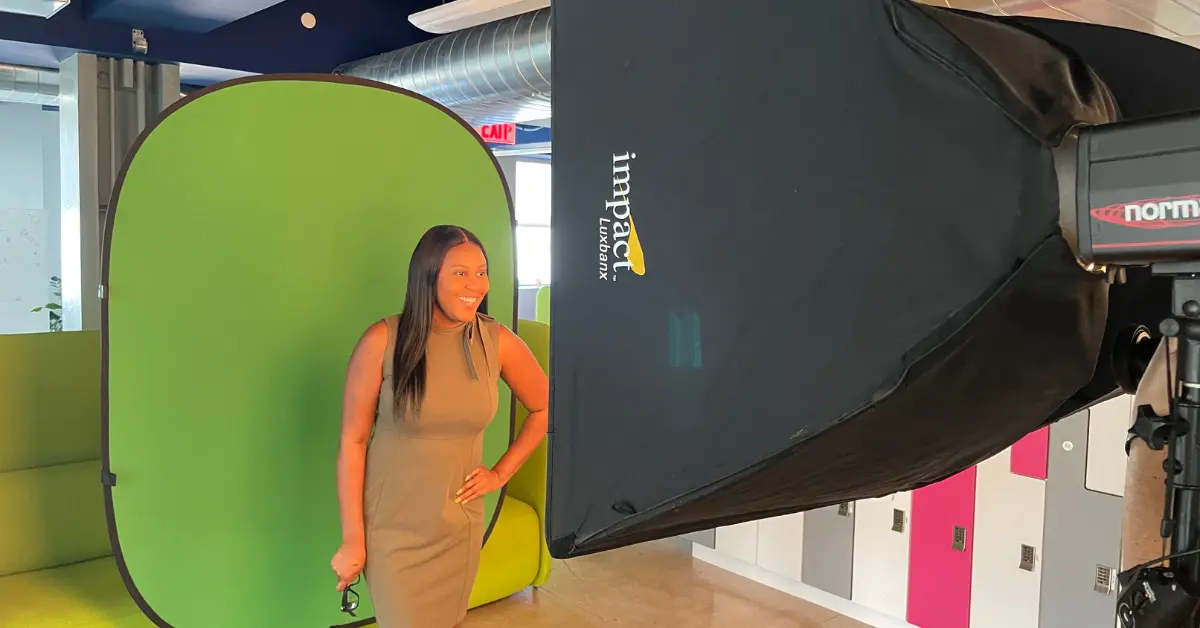
On-site corporate photography for businesses across New York City.
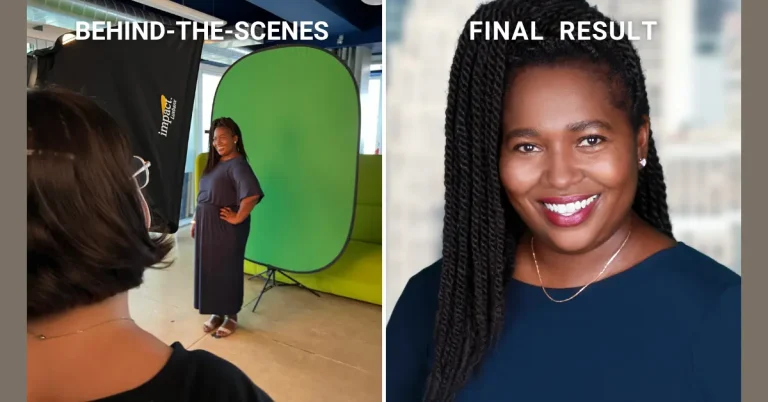
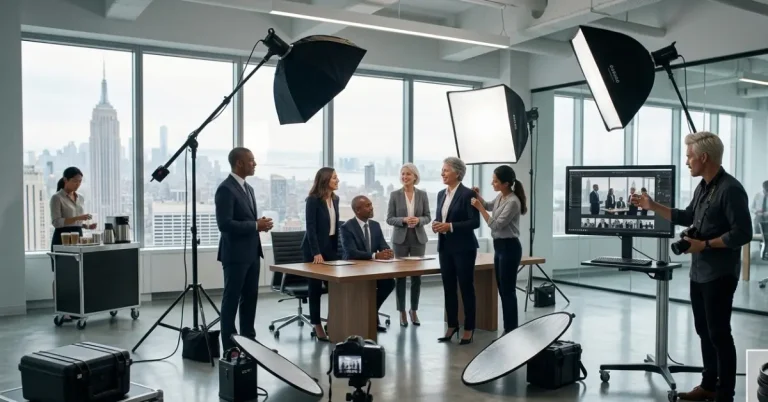
Most of our sessions happen inside active NYC offices – photographing teams while they continue their workday with minimal disruption.
Over the years, we’ve found that the best corporate headshots aren’t just about looking professional. They’re about consistency across an entire company—from leadership down to individual team members.
We work with finance firms, tech companies, law offices, universities, and enterprise teams that need clean, consistent visuals for LinkedIn, websites, investor materials, and internal branding.
2. What Corporate Headshots Actually Do Today (in NYC)
Corporate headshots are not really about “looking professional” anymore. Most professionals already know they need one. The real question is what that photo is doing for the business once it’s online.
In New York City, a headshot usually shows up in places where decisions are made quickly and quietly—before anyone ever speaks to you:
- LinkedIn profiles during recruiting or sales research
- Company “About” pages when clients are comparing firms
- Investor decks during fundraising conversations
- Press articles and media features
- Email signatures in ongoing business communication
In all of these cases, the headshot is not decoration. It’s part of the first layer of trust.
What’s changed is when that trust is formed. In NYC especially, people don’t wait for a meeting to judge credibility. They form an opinion in seconds while scrolling a profile, a team page, or a pitch deck.
And that means the role of a corporate headshot has shifted into something more specific:
It has to reduce uncertainty.
When someone looks at a leadership team or an entire company page, they are not analyzing photography quality. They are subconsciously answering questions like:
- Do these people look aligned as a team?
- Does this company feel established and stable?
- Would I trust them with a deal, a hire, or an investment?
This is why inconsistent or outdated headshots create friction—even if no one can explicitly explain why.
In a city like New York, where most industries are crowded and competitive, visual consistency across a company quietly becomes part of how credibility is judged. Not because people are thinking about lighting or composition, but because inconsistency signals lack of structure.
That’s the real job of modern corporate headshots in NYC:
Not to impress people.
But to remove doubt before a conversation ever happens.
3. What NYC Companies Actually Use Corporate Headshots For
Most companies don’t book corporate headshots because they want “better photos.” They book them because something in their current visual presence is no longer working—usually across multiple places at once.
In NYC, corporate headshots are used less as photography assets and more as operational brand tools. Once they’re updated, they immediately show up everywhere the company is being evaluated.
LinkedIn profiles (individual + company-wide presence)
This is usually the most visible use case.
Employees and executives are constantly being discovered on LinkedIn through:
- recruiting outreach
- sales prospecting
- investor research
- partnership evaluation
A consistent set of headshots across a company signals something simple: the organization is active, aligned, and up to date.
In contrast, a mix of outdated selfies, old studio shots, and inconsistent lighting quietly makes a company feel less structured—even if the work itself is strong.
Company websites (team and leadership pages)
For most NYC companies, the “About” or “Team” page is where trust is either strengthened or weakened.
Visitors are not studying individual portraits. They are scanning for patterns:
- Do all the images feel like they belong to the same company?
- Does leadership visually match the tone of the business?
- Does the team feel cohesive or assembled over time?
This is where inconsistency becomes noticeable very quickly.
Investor decks and fundraising materials
In finance, tech, and startup environments, headshots often appear in pitch decks and fundraising materials.
Here the purpose is not personality—it’s credibility at speed.
Investors are making fast judgments about:
- leadership seriousness
- team stability
- organizational maturity
A clean, consistent set of executive photos supports that narrative without a single word being spoken.
Press features and media coverage
When a company is featured in an article, interview, or announcement, the headshot becomes part of the public-facing record.
Inconsistent or outdated images at this stage don’t just affect aesthetics—they can make a growing company look visually disconnected from its current stage.
This is especially important in NYC, where companies evolve quickly and visibility is high.
Email signatures, proposals, and day-to-day communication
This is the most overlooked use case.
Headshots are constantly embedded in:
- client proposals
- outbound sales decks
- email signatures
- internal directories
These are low-friction touchpoints, but they happen repeatedly. Over time, they shape perception just as much as websites or formal branding.
The pattern across all of these
Across every use case, the function of a corporate headshot in NYC is the same:
It reduces friction before a conversation happens.
Whether someone is:
- hiring you
- investing in you
- partnering with you
- or just researching your company
they are always forming an opinion before direct contact.
And the headshot is often the first piece of that decision-making process.
4. What I’ve Learned From Corporate Headshots in NYC
After photographing corporate teams across New York City—from finance firms in Midtown to tech startups in Brooklyn and enterprise offices in the Financial District—there are a few patterns that show up again and again.
These aren’t “photography tips.” They’re behaviors and realities that only become obvious after doing this work repeatedly in real office environments.
Most people think they are not photogenic (and that assumption is almost always wrong)
Almost every corporate session starts the same way.
People walk in, half-joking, half-serious, and say something like:
- I’m not good in photos.
- I never like how I look in headshots.
- Just do your best with me.
But within a few minutes of structured direction, that concern usually disappears.
The issue is rarely how someone looks—it’s that most people are not used to being guided in front of a camera in a professional setting. Once they relax and stop trying to “perform,” the expression usually becomes natural very quickly.
Expression matters more than equipment or setup
One of the clearest patterns is that technical factors are not what separate strong headshots from average ones.
Lighting can be identical. Background can be identical. Camera settings can be identical.
But the final result changes completely based on expression and body language.
Small adjustments—like shoulder tension, chin position, or eye focus—have a bigger impact than most people expect. The difference between “stiff” and “confident” is often just a few seconds of direction.
Finance and corporate professionals tend to over-control their expression at first
In structured industries like finance, law, and consulting, people often arrive with a very specific idea of how they should look: composed, controlled, and serious.
The challenge is that over-control usually creates stiffness in photos.
The most effective images tend to happen when that control softens slightly—when the expression still feels professional, but not forced.
This is especially noticeable in leadership portraits.
Startup and tech teams usually prefer the opposite problem
In contrast, startup and tech teams in NYC often aim for the opposite direction.
They want to look relaxed and approachable, but sometimes that translates into expressions that feel too casual or inconsistent across the team.
The goal in those sessions is usually to bring a bit more structure into the image—without losing the natural tone they’re aiming for.
Most discomfort disappears within the first few minutes
Another consistent pattern: the most difficult part of a session is almost always the beginning.
Once people see a few previews, understand the direction, and realize they are not being “judged,” the entire energy of the shoot changes.
What looked like hesitation at the start usually turns into confidence by the end of the session.
Consistency is harder than individual quality
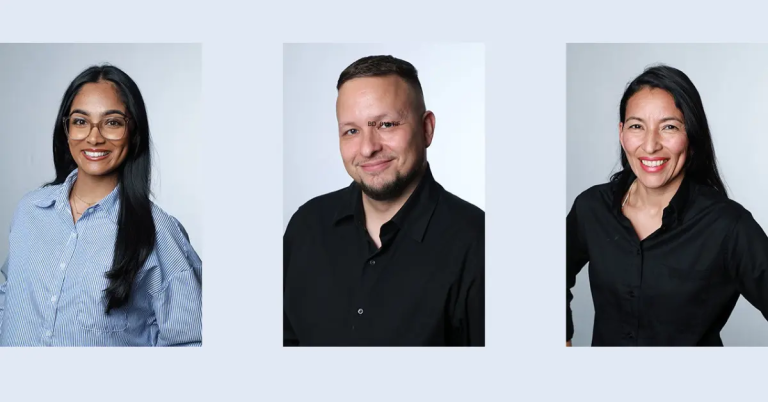
One of the most underestimated challenges in corporate headshots is not making one good photo—it’s making 20, 50, or 100 photos feel like they belong to the same company.
That requires consistency in:
- lighting direction
- framing
- expression guidance
- post-production style
Without that consistency, even strong individual portraits can feel disconnected when viewed as a group on a company website.
The biggest shift: people are not being “photographed,” they are being directed
Over time, one clear realization stands out.
Most people don’t need better “photography.” They need better direction.
The difference between a stressful session and a smooth one is usually not technical—it’s how clearly people are guided through the process.
When that part is done well, everything else becomes significantly easier for both the client and the final result.
5. NYC-Specific Challenges (Why NYC is Different)
Corporate headshots in New York City don’t follow the same rhythm as most other markets. The photography itself is similar, but the conditions around it—time, space, expectations, and workflow—change how everything has to be executed.
Most of what makes NYC different has nothing to do with cameras. It comes down to how companies operate here.
Time is the biggest constraint
In NYC, time is rarely flexible.
Employees are moving between:
- meetings
- client calls
- deadlines
- internal priorities
So a corporate headshot session is not treated as a standalone event—it has to fit inside an already full workday.
That means sessions need to be structured tightly, with minimal downtime and a clear flow that keeps people moving without interrupting business operations.
On-site work is the default, not a luxury
Unlike smaller markets where teams might come to a studio, most NYC corporate headshots happen inside offices.
Not because it’s a trend, but because it’s practical.
Traveling 30–60 minutes for a headshot is often not realistic for:
- finance teams in Midtown
- law firms in Manhattan
- tech teams across Brooklyn or SoHo
So the entire setup has to be portable, efficient, and adaptable to real office environments—conference rooms, open spaces, or temporary setups.
Office environments are never controlled
Unlike a studio, NYC offices are not designed for photography.
That creates variables like:
- mixed lighting conditions
- limited space for setup
- interruptions from daily operations
- unpredictable movement through the space
A big part of corporate photography here is not just capturing images—it’s adapting quickly without disrupting how the company functions.
Expectations are higher across all industries
There is very little tolerance for “average” results in NYC.
Whether it’s finance, law, tech, or education, companies generally expect:
- polished, modern visuals
- consistent branding across teams
- fast turnaround times
- minimal back-and-forth
At the same time, they also expect the process to feel efficient and controlled, even when dozens of employees are involved.
That combination raises the standard significantly.
Multiple industries, multiple visual languages
NYC is not a single-market environment. It’s a mix of industries that all interpret “professional” differently.
For example:
- Finance tends to favor structured, traditional portraits
- Tech companies often prefer a more relaxed, modern look
- Legal and consulting lean toward authority and clarity
- Education and nonprofit sectors often balance approachability with professionalism
A single session often has to account for these differences while still producing a consistent overall set.
Scale changes everything
Many NYC companies are not photographing 5 or 10 people—they’re photographing 30, 70, sometimes 100+ employees.
At that scale, small inefficiencies become major issues:
- scheduling delays compound quickly
- inconsistent lighting becomes noticeable in group comparisons
- workflow bottlenecks slow down entire departments
So the session is not just about photography—it becomes a coordination system inside an active business.
Consistency becomes more important than individuality
In a smaller setting, each headshot can stand on its own.
In NYC corporate environments, headshots are almost always viewed together:
- on team pages
- on LinkedIn company searches
- in investor or client materials
That means inconsistency is immediately visible. Even subtle differences in lighting, tone, or expression can make a team look less unified than it actually is.
The real difference in NYC
The biggest difference is not creative—it’s operational.
Corporate headshots in New York are shaped by constraints:
- limited time
- active workplaces
- high expectations
- large teams
- diverse industries
Success comes less from “getting a great photo” and more from running a controlled, efficient process that fits seamlessly into how NYC companies actually work.
6. How a Corporate Headshot Session Works (Step-by-Step Process)
A corporate headshot session in NYC is not a single shoot—it’s a coordinated workflow inside an active business. The goal is to move efficiently through a team while keeping the quality and consistency of every image aligned with the company’s brand.
Here’s what the process typically looks like from start to finish.
Step 1: Pre-shoot planning (before we arrive)
Every session starts with coordination, not photography.
This includes understanding:
- total number of employees being photographed
- team structure (departments, leadership, remote vs on-site staff)
- intended use of the images (LinkedIn, website, investor materials, etc.)
- office layout and available space for setup
- timing constraints within the workday
For larger NYC teams, this step is what prevents delays later. The goal is to create a flow that works with the company’s schedule, not against it.
Step 2: On-site setup inside the NYC office
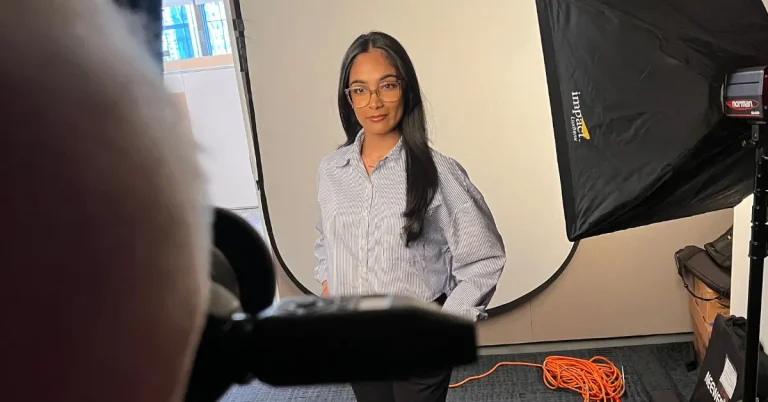
On the day of the session, the setup is brought directly into the workplace.
This usually involves:
- controlled lighting setup adapted to the space
- background selection based on brand tone (clean, modern, neutral)
- positioning the setup to minimize disruption to daily operations
In NYC offices, space is often limited or shared, so the setup has to be efficient and flexible without compromising consistency.
Step 3: Employee flow and session structure
Once everything is set up, employees are photographed in a structured flow.
Instead of long sessions, each person is guided through a short, focused process.
This typically includes:
- quick adjustment of posture and framing
- simple direction for expression and eye line
- a small set of controlled shots per person
The system is designed so employees can step in, be photographed efficiently, and return to work with minimal interruption.
For larger teams, scheduling blocks help keep departments moving in an organized way.
Step 4: Real-time direction during the shoot
Most people are not used to being photographed in a corporate setting, so direction is a key part of the process.
This is where small adjustments make a big difference:
- relaxing shoulders and posture
- refining facial expression (serious vs approachable balance)
- adjusting chin and eye line for natural confidence
- removing stiffness without losing professionalism
The goal is not to “pose” people heavily, but to guide them into a natural, usable expression that fits their role and industry.
Step 5: Executive portraits (leadership-focused sessions)
Executives are usually photographed with slightly more attention to presence and framing.
These sessions focus on:
- authority without looking rigid
- confidence without aggression
- approachability without informality
Because executive images are often used in investor decks, press releases, and public communications, the direction is more intentional and refined compared to standard team headshots.
Step 6: Review and selection (if included in workflow)
Depending on the company’s preference, selection can happen during or after the session.
For larger teams, the goal is often consistency rather than extensive selection, so the process is kept streamlined.
When review is done on-site, it helps ensure alignment before moving through the rest of the team.
Step 7: Retouching and post-production
After the session, images go through a controlled editing process.
Retouching is kept natural and minimal, focusing on:
- cleaning up distractions
- balancing skin tone and lighting
- maintaining real texture and authenticity
The goal is to enhance the image without making it feel over-edited or artificial, especially for corporate use where trust matters.
Step 8: Delivery and final files
Final images are delivered in formats suitable for:
- LinkedIn profiles
- company websites
- internal directories
- investor and press materials
Turnaround times are typically structured to match business needs, especially for companies updating branding, launching new websites, or preparing announcements.
The overall goal of the process
Every step is designed around one principle:
A corporate headshot session should not interrupt a business—it should integrate into it.
When the process is structured correctly, companies get consistent, usable images without losing time, focus, or workflow efficiency.
7. What Makes a Great Corporate Headshot
A strong corporate headshot in NYC isn’t defined by expensive equipment or dramatic lighting. Most people never notice those things anyway.
What actually matters is whether the image works in real business contexts—LinkedIn, company websites, investor decks, press features—where it’s usually seen for only a few seconds.
From photographing hundreds of professionals across NYC, there are a few consistent factors that separate effective headshots from average ones.
Expression: the balance between confidence and approachability
Expression is the single most important element.
A good corporate headshot doesn’t try to look overly serious or overly friendly. It sits in the middle.
- Too serious → feels distant or unapproachable
- Too casual → loses authority
- Balanced → feels credible and human
In practice, the best expressions usually come after a few adjustments, not on the first attempt. Small direction—relaxing the face, softening tension, adjusting eye focus—makes a larger difference than most people expect.
Posture: subtle structure, not stiffness
Posture in corporate headshots is not about “perfect posing.” It’s about controlled natural alignment.
Good posture usually means:
- shoulders relaxed, not raised
- slight forward engagement toward the camera
- head positioned to avoid tension or distortion
What you want to avoid is stiffness. When posture becomes too rigid, the image starts to feel forced, even if everything else is technically correct.
Lighting: consistency over creativity
In corporate photography, lighting is not meant to be dramatic—it’s meant to be consistent.
A good setup ensures:
- even skin tone
- clear facial definition
- no harsh distractions or shadows
- uniform look across an entire team
This becomes especially important in NYC companies where headshots are viewed together on team pages or directories. Consistency matters more than individual “creative” lighting variations.
Wardrobe: simple, intentional, and aligned with role
Clothing plays a supporting role, not the main one.
What tends to work best:
- solid colors or subtle patterns
- professional but not distracting styles
- outfits that match the company culture
Different industries in NYC approach this differently:
- finance and law tend to lean more formal
- tech and startups often go slightly more relaxed
- leadership roles usually sit one level above standard team attire
The key is alignment with how the person actually shows up in their professional role—not just generic “business attire” rules.
Background: neutral and distraction-free
The background should never compete with the person.
Most effective corporate headshots use:
- clean neutral tones (gray, white, soft gradients)
- controlled depth that separates subject from background
- minimal visual distraction
The goal is to keep attention on the face, not the environment.
Retouching: clean, not artificial
Retouching is where many corporate headshots lose credibility.
A strong edit does:
- light cleanup of temporary distractions
- subtle skin tone balancing
- preservation of natural texture
What it avoids:
- overly smooth or “plastic” skin
- altered facial structure
- unnatural lighting corrections
In NYC corporate environments, authenticity matters. People should look like themselves on a good day—not like a retouched version of someone else.
Consistency (when images are viewed as a group)
Individual headshots matter, but most corporate photography is judged in groups.
On company websites or LinkedIn pages, viewers are scanning:
- do these images feel aligned?
- do they represent one organization?
- does the quality feel consistent across departments?
Even small differences in lighting, framing, or tone become noticeable when viewed side by side. That’s why consistency often matters more than perfection in any single image.
The real definition of a strong corporate headshot
A great corporate headshot doesn’t try to stand out creatively.
It does three things well:
- looks natural
- feels credible
- fits seamlessly into the company’s professional presence
When those three elements align, the image does its job—quietly but effectively—in every place it appears.
8. Executive Headshots vs Team Headshots
Most companies in NYC treat corporate headshots as a single category. In practice, they serve two very different roles inside a business: one represents leadership, and the other represents the organization as a whole.
When both are done correctly, they feel consistent—but their purpose, direction, and usage are not the same.
Executive headshots: leadership presence and external visibility
Executive headshots are not just profile images. They are often the most visible representation of a company in public-facing contexts.
These images are typically used in:
- investor decks and fundraising materials
- press releases and media coverage
- conference bios and speaking events
- leadership pages on company websites
- high-visibility LinkedIn profiles
Because of this, the goal is not just to look professional—it is to communicate leadership presence.
In practice, executive portraits focus on:
- authority without looking rigid
- confidence without appearing aggressive
- approachability without losing seriousness
- a controlled, intentional expression
There is usually more time spent on direction here, because small adjustments in posture and expression significantly affect how leadership is perceived.
A strong executive headshot should feel like someone who can represent the company in a high-stakes environment without needing explanation.
Team headshots: consistency and brand alignment
Team headshots serve a completely different purpose.
They are not about highlighting individual presence. They are about showing the company as a unified organization.
These images are most commonly used on:
- “About” and “Team” pages
- LinkedIn employee profiles
- internal directories and HR systems
- recruitment and employer branding materials
Here, consistency matters more than individual expression.
The focus is on:
- uniform lighting across all employees
- consistent framing and background
- similar tone and expression direction
- a cohesive visual identity across departments
When done correctly, no single person stands out in an unintended way. Instead, the entire team feels like part of one structured organization.
The key difference: purpose, not quality
One common misunderstanding is that executive headshots are “higher quality” than team headshots. That’s not the case.
The difference is purpose.
- Executive headshots are designed for visibility and leadership positioning
- Team headshots are designed for consistency and brand cohesion
Both require the same level of technical quality. They are simply optimized for different outcomes.
Why both matter in NYC companies
In New York, companies rarely operate in just one context. Their visuals appear across multiple high-stakes environments at the same time.
That means:
Executives are seen in:
- investor communications
- press features
- public-facing announcements
Teams are seen in:
- hiring platforms
- company websites
- internal and external directories
If one side is strong and the other is inconsistent, the overall brand feels incomplete.
The real goal: one company, two visual roles
The most effective corporate headshot systems in NYC don’t treat these as separate projects. They treat them as two parts of the same visual identity.
- Leadership establishes presence
- Teams establish cohesion
When both are aligned, the company feels more structured, more credible, and more intentional across every platform where it appears.
9. Case Studies / Real NYC Examples (Very Important for Ranking)
This is the section most corporate headshot pages in NYC either skip or get wrong. They talk about “experience” in general terms, but don’t show how that experience actually looks in real projects.
In practice, this is one of the strongest trust signals for both Google and potential clients—because it proves the work happens in real environments, with real constraints, not just theory.
Below are examples of how corporate headshot sessions typically work across different NYC organizations.
Case Study 1: 40+ Employee Finance Team (Midtown Manhattan)
A finance company in Midtown needed a full team update across leadership and staff. The main challenge was not photography—it was coordination.
Employees were moving between meetings throughout the day, so the session had to be structured around availability rather than a fixed schedule.
What the session involved:
- On-site setup inside their office space
- Staggered employee flow throughout the day
- Consistent lighting maintained across all portraits
- Short, efficient sessions per employee
Key constraint:
Limited downtime. Employees could only step away briefly without interrupting workflow.
Outcome:
A fully consistent set of headshots across the entire team, suitable for their website, internal directory, and external client-facing materials.
The most important result wasn’t individual photos—it was that the entire company looked visually aligned when viewed as a group.
Case Study 2: University Department (Faculty + Administration)
An NYC academic department needed updated headshots for faculty members, administrative staff, and leadership.
The challenge here was variation—different roles, different seniority levels, and different levels of comfort in front of the camera.
What the session involved:
- Mixed group scheduling (faculty + staff)
- Balancing formal and approachable expressions
- Maintaining consistency across diverse individuals
- Adapting direction for different comfort levels
Key constraint:
High variation in subjects while maintaining a unified visual identity.
Outcome:
A set of portraits that balanced professionalism and approachability, suitable for faculty profiles, institutional websites, and academic publications.
The key success factor was consistency across a diverse group, without making the images feel overly uniform or rigid.
Case Study 3: Cybersecurity Company (Leadership + Team Consistency)
A cybersecurity company needed updated headshots for both leadership and their broader team, with a strong focus on trust and modern positioning.
In this industry, visuals often support investor communication and enterprise credibility.
What the session involved:
- Executive portraits with more controlled direction
- Team headshots with consistent framing and lighting
- On-site setup adapted to a modern office environment
- Fast-paced workflow to minimize disruption
Key constraint:
Balancing two different visual needs—executive authority and team consistency—within the same session.
Outcome:
A unified set of images that reinforced credibility across both leadership and staff, usable across website, investor materials, and recruitment channels.
The consistency across departments helped reinforce the company’s overall sense of structure and reliability.
Case Study 4: Event-Based Headshot Session (High-Volume NYC Office)
A fast-growing company needed headshots for a large number of employees but had limited availability for scheduling individual sessions.
Instead of spreading it out over multiple days, the session was structured as a high-volume on-site setup during a single coordinated window.
What the session involved:
- Temporary studio setup inside office space
- Continuous flow of employees throughout the day
- Standardized lighting and framing for efficiency
- Quick direction system to maintain speed and consistency
Key constraint:
High volume with minimal disruption to daily operations.
Outcome:
A large set of consistent headshots delivered efficiently, without requiring employees to leave the office or significantly interrupt workflows.
The success of the project depended entirely on maintaining consistency at scale.
What these case studies actually show
Across all of these examples, the technical photography is only one part of the result.
The real pattern is this:
Corporate headshots in NYC are defined more by logistics and consistency than by individual images.
Different industries, different team sizes, and different office environments all require adaptation—but the end goal stays the same:
A unified visual system that accurately represents the company across every platform where it appears.
10. Common Mistakes Companies Make When Booking Corporate Headshots in NYC
Most corporate headshot problems in NYC don’t come from bad photography. They come from decisions made before the session even starts—usually around pricing, planning, and expectations.
These mistakes are common across finance firms, startups, law offices, and enterprise teams. They don’t always show up immediately, but they become obvious when the images are used across LinkedIn, websites, and internal systems.
Choosing based only on price
This is the most frequent mistake.
On the surface, corporate headshots can look like a simple service. That often leads companies to choose the lowest quote without fully considering what’s included in the process.
The issue is not just image quality—it’s consistency and usability across a full team.
What typically goes wrong:
- inconsistent lighting across employees
- uneven posing direction
- lack of structured workflow for larger teams
- results that don’t feel unified on company pages
In NYC, where headshots are often used at scale, inconsistency becomes more noticeable than individual photo quality.
Ignoring consistency across employees
Many companies evaluate headshots individually instead of as a group.
A single good photo can still result in a weak overall presentation if:
- lighting styles vary
- framing changes from person to person
- editing looks inconsistent
- expressions feel mismatched across the team
On a website or LinkedIn company page, people don’t see one photo—they see the entire set at once. That’s where inconsistency becomes a branding issue.
Over-editing the final images
Retouching is important in corporate photography, but over-editing is one of the fastest ways to reduce credibility.
When images are overly smoothed or heavily altered:
- they stop looking natural
- they lose professional authenticity
- they can feel disconnected from real appearance
In NYC corporate environments—especially finance, law, and consulting—trust matters more than perfection. People need to look like themselves, not an edited version of themselves.
Not planning for how the office actually functions
A corporate headshot session is often scheduled as if the office will pause for photography. In reality, NYC offices don’t work that way.
Common planning issues include:
- employees double-booked with meetings
- unclear scheduling blocks
- departments not organized in advance
- lack of communication before the shoot day
When planning is weak, even a well-executed shoot becomes inefficient. Delays accumulate, and the session starts to disrupt the workflow instead of integrating into it.
Treating headshots as individual photos instead of a system
One of the biggest misunderstandings is thinking of corporate headshots as separate portraits for each employee.
In reality, they function as a single visual system.
That system needs to be consistent across:
- leadership
- departments
- new hires vs long-term staff
- internal and external platforms
When images are treated individually, the final result often feels fragmented. When they’re treated as a system, the company looks cohesive and structured.
Underestimating the importance of direction
Most people are not used to being photographed in a corporate context. Without clear direction, results tend to be inconsistent—even with good lighting and equipment.
Common issues include:
- stiff posture
- uncertain expressions
- overthinking the camera
- inconsistent energy across employees
The quality of the final image often depends less on technical setup and more on how clearly people are guided during the session.
Not aligning headshots with brand identity
Another common issue is disconnect between visuals and brand positioning.
For example:
- a modern tech company using overly formal, outdated-looking portraits
- a traditional finance firm using casual images that reduce perceived authority
When headshots don’t match the company’s identity, they create subtle confusion across websites, marketing materials, and recruitment pages.
Poor communication before the session
Many issues that appear during the shoot are actually caused before the shoot.
Without clear communication:
- employees arrive unprepared
- wardrobe choices vary widely
- expectations about the process are unclear
- internal coordination becomes reactive instead of structured
Good preparation reduces friction on the day of the session and improves overall consistency.
The underlying pattern
Across all of these mistakes, the same issue appears repeatedly:
Companies treat corporate headshots as a one-time visual task, instead of a structured part of their brand system.
In NYC especially, where headshots are used across multiple high-visibility platforms, that distinction makes a significant difference in how the company is perceived.
11. What You Actually Get From a Corporate Headshot Session in NYC
Most corporate headshot pages spend too much time explaining what headshots mean. What clients actually need at this stage is clarity on what they are getting, how the process works, and what the final output looks like in real business use.
This section is about removing uncertainty.
A structured on-site setup inside your NYC office
The session takes place directly inside your workspace, not in a separate studio.
This includes:
- a controlled lighting setup adapted to your office environment
- a clean, consistent background suited for corporate use
- a compact working area that fits around your team’s daily operations
The goal is to make the setup feel integrated into your office, not disruptive to it.
A clear, efficient workflow for employees
Each employee goes through a short, structured session designed to keep the process moving smoothly.
This typically includes:
- quick direction before stepping in front of the camera
- simple adjustments for posture and expression
- a focused set of images per person
The experience is designed to minimize downtime while maintaining consistency across the entire team.
Executive portraits with additional direction
Leadership sessions receive a more intentional approach.
These images are guided toward:
- confident but natural presence
- authority without stiffness
- approachability without informality
Executive portraits are often used in higher-visibility contexts, so they are treated with slightly more time and direction than standard team headshots.
Consistent visuals across your entire organization
One of the most important outcomes is consistency across all employees.
That means:
- uniform lighting style across the team
- consistent framing and composition
- aligned visual tone across departments
When placed together on a company website or LinkedIn page, the images feel like part of one system—not separate individual photos.
Professional retouching with a natural finish
All selected images are retouched with a focus on realism.
This includes:
- subtle cleanup of temporary distractions
- balanced skin tones and lighting
- preservation of natural texture and identity
The goal is not to change how people look, but to ensure the final images feel clean, professional, and usable across corporate platforms.
Fast, business-ready delivery
Final images are delivered in formats ready for immediate use across:
- LinkedIn profiles
- company websites
- internal directories
- investor and press materials
Turnaround is structured to support business timelines, especially for companies updating branding, hiring pipelines, or preparing external communications.
Scalable for teams of all sizes
Whether it’s a small leadership group or a large enterprise team, the process is built to scale.
This includes:
- efficient handling of 10–100+ employees
- structured scheduling to avoid workflow disruption
- consistent output regardless of team size or department
The system is designed for volume without sacrificing consistency.
What this actually means for your company
At a practical level, you’re not just getting headshots.
You’re getting a repeatable visual system that can be used across:
- recruitment and hiring
- investor and client communications
- internal and external branding
- company-wide online presence
The focus is not on individual images—it’s on how the entire organization appears when viewed as a whole.
12. Industries We Work With in NYC (Entity-Rich SEO Section)
Corporate headshots in New York City are used across a wide range of industries, but the purpose is slightly different in each one.
While the technical process stays consistent, what companies need the images to communicate changes based on how their industry operates, who they serve, and how they are evaluated externally.
Below are the main industries we work with in NYC and how corporate headshots are typically used in each.
Finance and banking
Finance teams in NYC rely heavily on corporate headshots for credibility and trust-building in high-stakes environments.
These images are commonly used on:
- company websites and leadership pages
- investor-facing materials
- internal directories and compliance systems
- LinkedIn profiles for client-facing staff
In this industry, the visual tone is typically structured, conservative, and highly consistent across teams. The goal is to reinforce stability and professionalism at scale.
Law firms and legal services
Law firms use corporate headshots to establish authority and trust before any direct client interaction.
Typical use cases include:
- attorney profile pages
- firm websites and practice area pages
- legal directories and publications
- media and press features
The visual expectation here is clarity and credibility. Images are usually more formal, with controlled expressions and minimal distraction in composition.
Technology and startups
NYC tech companies and startups use headshots as part of both recruitment and investor communication.
These images often appear in:
- team pages and “About” sections
- pitch decks and fundraising materials
- LinkedIn company profiles
- press announcements and product launches
The visual direction is typically more modern and relaxed, while still maintaining consistency across the team. The goal is to balance approachability with technical credibility.
Cybersecurity and enterprise tech
Cybersecurity companies place strong emphasis on trust and reliability in their visual identity.
Headshots in this space are commonly used for:
- executive leadership visibility
- investor and enterprise sales materials
- website trust-building sections
- conference and speaking engagements
The visual tone often leans toward modern professionalism—clean, controlled, and focused on credibility in high-trust environments.
Consulting firms
Consulting companies rely heavily on perception, as their teams are often the primary “product” clients evaluate.
Corporate headshots are used for:
- proposal documents and pitch decks
- client-facing presentations
- company websites and case studies
- recruitment and employer branding
Consistency across teams is especially important here, as consultants are frequently presented in groups across business materials.
Education and academic institutions
Universities and educational organizations use corporate headshots for faculty, staff, and leadership visibility.
Common applications include:
- faculty profile pages
- departmental websites
- research publications and institutional materials
- internal and external communications
The balance here is usually between professionalism and approachability, especially for public-facing academic roles.
Healthcare and medical organizations
Healthcare providers use corporate headshots to build trust with patients and partners before any in-person interaction.
These images are typically used in:
- provider directories and hospital websites
- medical staff profiles
- patient-facing platforms
- internal organizational systems
The visual expectation is calm, reliable, and approachable professionalism.
Mid-size and enterprise corporate teams
Beyond specific industries, many NYC companies fall into general enterprise categories where headshots function as part of internal infrastructure.
These images are used for:
- HR systems and employee directories
- LinkedIn company-wide updates
- internal communications platforms
- external brand and recruitment materials
At scale, the focus is not just on individual quality but on maintaining a unified visual identity across growing teams.
The common thread across all industries
While each industry has different expectations, the underlying purpose remains the same:
Corporate headshots in NYC are not just profile images—they are part of how organizations communicate trust, structure, and professionalism before any direct interaction takes place.
13. Corporate Headshot Pricing NYC (Transparency Section)
Corporate headshot pricing in NYC is not as simple as a fixed “per photo” rate. The cost depends less on the images themselves and more on how the session is structured, how many people are involved, and how the work fits into your office environment.
Most companies are not just paying for photography time. They are paying for a coordinated system that runs inside a working business without disrupting it.
What actually influences pricing
Corporate headshot pricing is typically shaped by a few key factors:
- Number of employees
Larger teams require more structured workflow, scheduling, and time management. - On-site setup requirements
Sessions inside NYC offices involve lighting setup, space adaptation, and equipment transport. - Turnaround speed
Faster delivery timelines require prioritized post-production workflow. - Level of consistency required
Company-wide uniformity across departments increases planning and post-production control. - Executive vs full-team coverage
Leadership portraits often involve additional direction and time.
Per-person pricing vs team-based pricing
There are generally two ways corporate headshots are structured in NYC:
Per-person pricing
This model is usually used for small groups or individual updates. It works when coordination is minimal and the session is simple.
Team-based pricing
Most NYC companies fall into this category. Pricing is based on a structured session designed to photograph multiple employees efficiently within a set workflow.
As team size increases, the per-person cost often becomes more efficient, not because quality changes, but because the setup and system are already in place.
Why corporate pricing is different from individual headshots
Corporate photography is not a collection of individual portrait sessions.
It involves:
- coordinated scheduling across teams
- maintaining consistent lighting and style across all employees
- working inside active office environments
- managing time-sensitive workflows
- delivering a unified visual system, not isolated images
Because of this, pricing reflects the complexity of the system, not just time behind the camera.
On-site work and its impact on cost
Most corporate headshot sessions in NYC are done on-site inside offices.
This introduces additional considerations:
- transporting and setting up equipment in different environments
- adapting lighting to real office conditions
- minimizing disruption to daily operations
- maintaining consistency across changing spaces and schedules
These factors are part of what makes corporate photography fundamentally different from studio-based individual portraits.
Volume efficiency for larger companies
For larger teams, pricing often becomes more efficient per employee as the scale increases.
This is because:
- the lighting setup remains consistent across the session
- workflow becomes more streamlined after initial setup
- employee flow is structured in batches or departments
As a result, enterprise-level sessions are typically designed as a single coordinated project rather than multiple individual bookings.
The real value behind corporate headshot pricing
The cost is not just about the final images. It reflects the ability to:
- run a structured photography system inside an active NYC office
- maintain visual consistency across an entire organization
- handle scheduling, coordination, and scale efficiently
- deliver images that work across multiple business platforms
In most cases, companies are not buying photos—they are investing in a repeatable visual process that supports how their organization is seen externally.
Why exact pricing is usually customized
No two companies in NYC have the same requirements. A 10-person leadership update and a 100-person enterprise session require very different levels of planning and execution.
For that reason, pricing is typically finalized after understanding:
- team size and structure
- location and setup conditions
- turnaround expectations
- usage requirements
This ensures the session is properly designed for both efficiency and consistency from the start.
14. How to Prepare for a Corporate Headshot Session
Most corporate headshot issues in NYC don’t happen during the shoot—they happen before it.
When a team is well-prepared, the session runs smoothly, stays on schedule, and produces consistent results across everyone. When preparation is unclear, even a well-run setup can slow down or become inconsistent across employees.
Here’s how companies can prepare in a way that actually improves the final outcome.
Communicate clearly with your team in advance
The most important step is internal communication.
Employees should know:
- why the headshots are being done
- when and where they are scheduled
- how long each session will take
- what the general process will feel like
In NYC offices, people are often balancing meetings and deadlines. Without clear communication, the session becomes disruptive simply because expectations weren’t set.
Guide wardrobe choices (without overcomplicating it)
Clothing doesn’t need to be identical, but it should be consistent in tone.
Most corporate teams do well with:
- solid, neutral colors
- simple patterns or no patterns
- professional attire aligned with company culture
- layers like blazers, shirts, or simple tops
The goal is visual cohesion across the team, not uniformity.
In most NYC industries:
- finance and legal tend to lean more formal
- tech and startups are usually slightly more relaxed
- leadership often sits one level more formal than the rest of the team
Schedule employees in structured blocks
For larger teams, scheduling is one of the biggest factors in how smoothly the day runs.
Instead of random drop-ins, it helps to:
- assign time blocks to departments or teams
- group leadership separately if needed
- build small buffers between groups
- avoid overlapping with peak meeting times when possible
This structure prevents bottlenecks and keeps the flow consistent throughout the session.
Reduce interruptions during the session day
Corporate headshots work best when the office flow is respected, not paused.
To minimize disruption:
- choose a consistent shooting area in the office
- avoid moving the setup multiple times
- keep employees informed of timing windows
- allow people to return to work immediately after their session
In NYC offices, even small interruptions can compound quickly, so efficiency matters more than flexibility.
Set realistic expectations internally
One common issue is mismatched expectations about the experience.
Employees should understand:
- they don’t need to “know how to pose” beforehand
- direction will be provided during the session
- multiple shots will be taken quickly and efficiently
- the process is designed to be simple and guided
This reduces hesitation when people step in front of the camera and helps produce more natural expressions.
Encourage simple, natural preparation
There is no need for extensive preparation before a corporate headshot session.
However, small things help:
- avoid last-minute wardrobe changes
- ensure grooming is consistent with normal professional appearance
- arrive on time within your scheduled block
- avoid overthinking how to “look” in photos
Most people perform better when they don’t overprepare or overthink the process.
Prepare leadership separately when possible
Executive sessions often benefit from slightly more preparation.
This can include:
- aligning on intended use (press, investor, website, etc.)
- deciding on tone (more formal vs more approachable)
- allocating slightly more time for direction
Since executive images often carry more external visibility, a bit more intentionality here helps improve results.
The underlying principle
Good preparation doesn’t make the photography more complex—it makes it more efficient.
In NYC corporate environments especially, the difference between a smooth session and a stressful one is usually not technical. It comes down to how clearly the process is communicated and how well the team is organized before the session begins.
When preparation is handled properly, the photography itself becomes straightforward and predictable.
15. FAQs: Corporate Headshots NYC
This FAQ section is structured to match the way people actually search—and the way Google and AI systems extract direct answers for featured snippets.
What are corporate headshots used for?
Corporate headshots are used to represent employees and leadership across professional platforms.
In NYC companies, they are commonly used on:
- LinkedIn profiles
- company websites (About and Team pages)
- investor decks and pitch materials
- press releases and media coverage
- internal directories and HR systems
The main purpose is to create a consistent, professional visual identity for the organization.
How long does a corporate headshot session take?
The time depends on the size of the team and how the session is structured.
In most NYC corporate environments:
- individual sessions are short and efficient
- larger teams are organized into scheduled blocks
- entire sessions can run over several hours for enterprise teams
The focus is on maintaining workflow efficiency while photographing everyone consistently.
Do you shoot corporate headshots on-site in NYC offices?
Yes. Most corporate headshot sessions in NYC are done on-site inside company offices.
This allows:
- employees to stay in their workflow
- reduced disruption to the workday
- consistent lighting and setup across all team members
- efficient handling of larger groups
On-site setups are the standard for most mid-size and enterprise companies in New York.
How many employees can be photographed in one day?
The number of employees depends on scheduling, office flow, and team size.
With a structured setup, it is possible to photograph:
- small teams in a few hours
- mid-size companies in a half to full day
- larger enterprise teams across a full-day session
The key factor is not speed, but maintaining consistency across all images.
How fast is delivery for corporate headshots?
Turnaround time is typically designed to match business needs.
Most companies request fast delivery so images can be used for:
- website updates
- LinkedIn refreshes
- press announcements
- hiring and recruitment materials
Final delivery timelines depend on the scope of the project and number of images, but the process is built for business use, not long delays.
Do you retouch corporate headshots?
Yes. All selected images are professionally retouched.
Retouching is kept natural and subtle, focusing on:
- removing temporary distractions
- balancing skin tone and lighting
- maintaining realistic texture and detail
The goal is to enhance professionalism without making the image look artificial or overly edited.
Can you maintain consistency across a large team?
Yes. Consistency is one of the most important parts of corporate headshot photography.
This is achieved through:
- controlled lighting setup across the entire session
- consistent framing and camera positioning
- standardized posing direction
- unified editing style across all images
This ensures the team looks cohesive when viewed on websites, directories, or internal platforms.
What should employees wear for corporate headshots?
Employees should wear clothing that reflects their professional role and company culture.
In most NYC corporate settings, this includes:
- solid colors or subtle patterns
- professional, well-fitted clothing
- avoiding overly bright or distracting designs
Finance, legal, and consulting firms often lean more formal, while tech and startup environments are typically more relaxed.
The goal is consistency across the team, not identical outfits.
Do executive headshots differ from team headshots?
Yes. Executive and team headshots serve different purposes.
- Executive headshots focus on leadership presence, authority, and external visibility
- Team headshots focus on consistency and unified brand representation
Both are part of the same visual system but are directed differently based on their use cases.
Why are corporate headshots important for NYC companies?
In NYC, corporate headshots are often the first visual impression of a company.
They matter because they:
- build trust before any direct interaction
- improve brand perception online
- support hiring and recruitment efforts
- create consistency across teams and departments
In a competitive market like New York, visual presentation directly affects credibility.
16. Request a Corporate Headshot Quote for Your NYC Team
By this point, most companies already know whether they need updated corporate headshots. The real question is how quickly the process can be organized without disrupting day-to-day operations.
Corporate photography in NYC is most effective when it’s planned around your team—not the other way around. That’s why the next step is a short conversation to understand your structure and requirements before anything is scheduled.
What happens next
When you reach out, the focus is not on selling a package—it’s on defining the scope of the session.
Typically, this includes:
- number of employees and departments involved
- leadership vs full-team coverage
- on-site setup requirements inside your office
- timing and scheduling constraints
- intended use of the final images (web, LinkedIn, press, investor materials)
This helps design a session that fits your workflow instead of interrupting it.
Why this step matters
Corporate headshots are not a one-size-fits-all service.
A 10-person leadership update and a 100-person enterprise session require completely different levels of coordination. Without clarity upfront, the process becomes less efficient for everyone involved.
A quick planning stage ensures:
- consistent results across the entire team
- minimal disruption to your office schedule
- fast, structured execution on the day of the shoot
- images that are usable across all business platforms
Built for NYC companies
In New York, speed and structure matter.
Most companies are updating headshots for:
- new hires and team expansion
- website or brand refreshes
- investor or press readiness
- LinkedIn and recruitment updates
The process is designed to handle these needs efficiently, directly inside your office environment.
Start with a simple request
If you’re planning a corporate headshot session in NYC, the first step is straightforward.
You don’t need a fully defined plan—just the basics of your team size and goals.
From there, the session is structured around your company’s workflow, timing, and output requirements.
Final note
Good corporate headshots don’t happen by chance. They come from clear structure, consistent execution, and an understanding of how companies actually operate in NYC.
If you’re ready to update your team’s visuals, the next step is simply to request a quote and outline your needs.